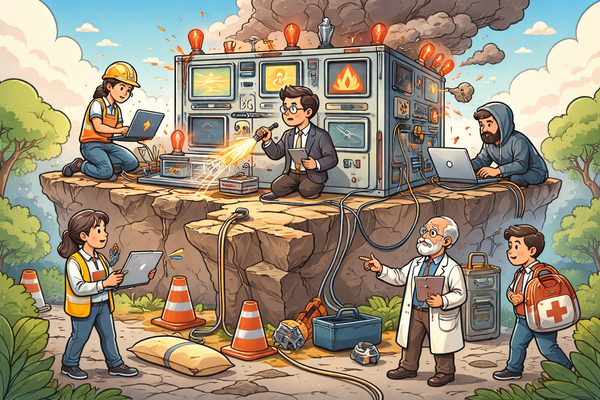
Hidden Costs of Fragile Systems, The Economic Burden of Silent Technical Debt
Fragile systems persist because their costs are hidden. This essay examines how silent technical debt becomes an economic liability, why fragility is rational in the short term, and how deferred risk quietly erodes adaptability and trust.
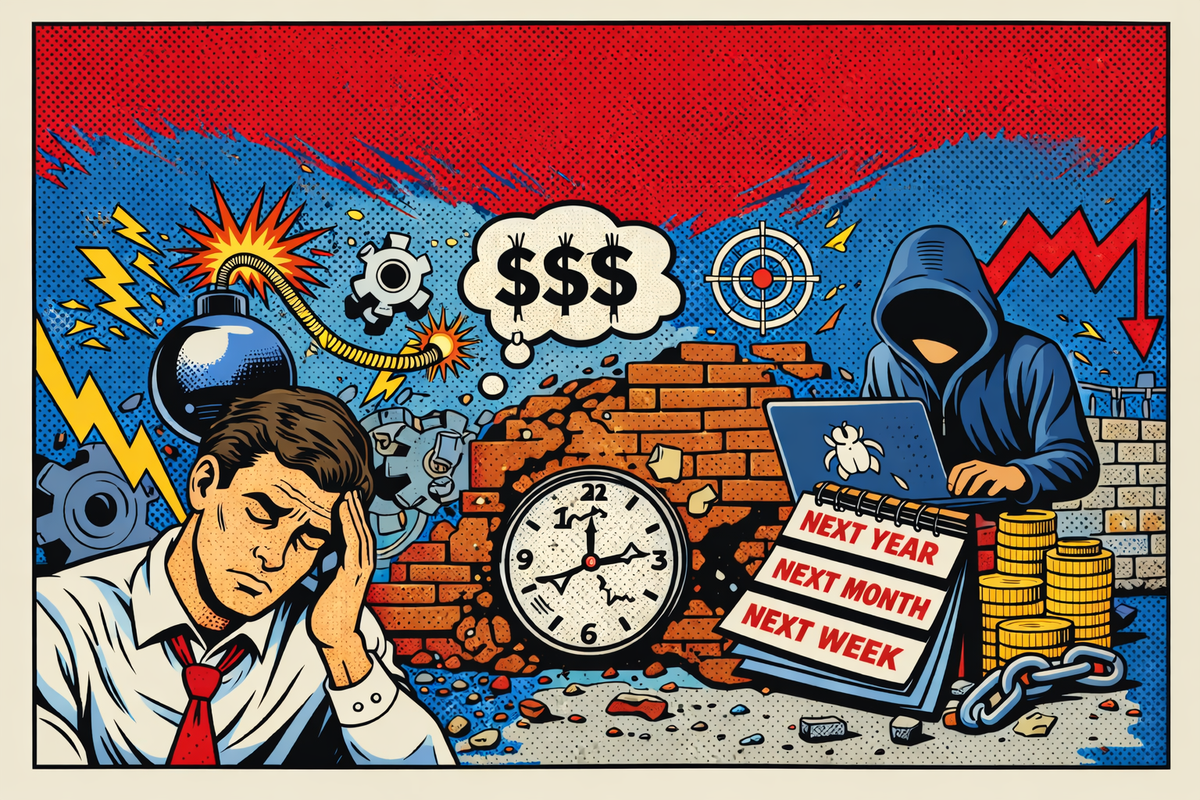
Fragile systems rarely announce themselves as such. They continue to operate, deliver value, and meet surface level expectations long after their internal coherence has begun to erode. From the outside, they appear functional. From the inside, they accumulate distortions that quietly alter cost structures, incentives, and risk exposure. What is commonly described as technical debt is therefore not merely a maintenance concern. It is an economic liability whose costs are paid unevenly, delayed strategically, and often ignored until they become unavoidable.
This essay examines the hidden economic burden of fragile systems and silent technical debt. It argues that fragility persists not because organisations fail to recognise it, but because its costs are systematically mispriced, deferred, and externalised. Silent technical debt survives precisely because it is economically rational in the short term, even as it undermines long term viability.
Fragility as an Economic Condition
Fragility is often framed as a technical property. Systems are described as brittle, tightly coupled, or overly complex. While these descriptions are accurate, they obscure the underlying driver. Fragility persists because it is tolerated, and it is tolerated because its costs are not immediately visible to the actors who benefit from postponement.
A fragile system is one whose failure modes are non linear. Small disturbances produce outsized consequences. Recovery costs exceed prevention costs, yet prevention remains deferred. This mismatch is not accidental. It reflects incentive structures that reward continuity over correction.
In economic terms, fragility represents a deferred liability. The system accrues value today by postponing investment in resilience, while transferring future cost to operators, users, or successors.
Silent Technical Debt and Deferred Payment
Technical debt is often discussed as a metaphor. In practice, it behaves like unpriced credit.
Short term decisions generate immediate benefit. Features ship faster. Costs are reduced. Timelines are met. The corresponding liabilities do not appear on balance sheets. They surface later as slower change, higher error rates, increased operational overhead, and reduced adaptability.
Silence is critical to this process. As long as the system does not fail visibly, debt remains abstract. Monitoring focuses on outputs rather than structural health. Metrics capture performance, not strain. The organisation experiences stability while its cost of change rises quietly.
This silence is not ignorance. It is a rational outcome of how success is measured.
Who Pays for Fragility
The economic burden of fragile systems is distributed asymmetrically.
Builders benefit first. They deliver results quickly and are rewarded accordingly.
Organisations benefit next. They extract value while deferring reinvestment.
Operators absorb growing complexity and cognitive load.
Users absorb reliability degradation and risk exposure.
Future teams inherit constrained options and escalating costs.
Those who benefit most from deferral are rarely those who pay when the debt matures. This separation sustains fragility. If cost and benefit were aligned temporally and institutionally, technical debt would be addressed far earlier.
Fragility persists because it is profitable to ignore.
Maintenance as an Unfunded Externality
Maintenance work rarely produces immediate visible value. It prevents failure rather than enabling growth. In incentive driven environments, this places it at a disadvantage.
Budgets prioritise expansion. Roadmaps prioritise features. Teams are evaluated on delivery rather than durability. Maintenance becomes an externality, necessary but undervalued.
From an economic perspective, this creates underinvestment in resilience. The system becomes increasingly expensive to operate, yet these costs are absorbed operationally rather than strategically. Over time, maintenance effort increases simply to preserve existing capability.
This is not technical decay. It is economic neglect.
Fragility and Option Loss
One of the most significant hidden costs of fragile systems is the loss of optionality.
As technical debt accumulates, the range of viable future actions narrows. Changes take longer. Experiments become risky. Integration becomes expensive. Decisions that were once reversible become permanent.
This loss is rarely quantified. Yet it is economically decisive. Systems with high optionality can adapt to market change, regulatory pressure, or threat evolution. Fragile systems cannot. They survive only as long as external conditions remain favourable.
When conditions shift, fragility converts rapidly into crisis.
Silent Failure as Cost Accumulation
Fragile systems often fail silently before they fail catastrophically. Minor incidents are normalised. Workarounds become standard. Alerts are ignored. Complexity is managed informally.
Each silent failure adds cost. Recovery time increases. Trust erodes. Human effort compensates for structural weakness. These costs accumulate without triggering strategic response because no single event justifies intervention.
From an economic standpoint, silent failure is not absence of cost. It is accumulation of cost without accounting.
By the time failure becomes visible, the cost curve has already steepened.
Why Fragility Is Rational in the Short Term
It is important to acknowledge that fragility is often the rational choice under existing constraints.
Investing in resilience competes with immediate objectives. The return on investment is probabilistic and delayed. The penalty for inaction is uncertain. Under these conditions, rational actors defer.
This does not make fragility desirable. It makes it predictable.
Systems do not become fragile because of negligence. They become fragile because incentives reward deferral more reliably than prevention.
Repricing Fragility
If fragile systems persist because their costs are hidden, then addressing fragility requires making those costs legible.
This includes:
- measuring cost of change, not just cost of operation
- tracking human effort spent compensating for complexity
- accounting for incident near misses as economic signals
- treating loss of optionality as strategic risk
- linking durability metrics to decision making authority
These practices do not eliminate technical debt. They alter its economics.
When fragility becomes expensive in the present rather than the future, behaviour changes.
Ethical Consequences of Silent Debt
At this point, ethics enter the analysis.
Silent technical debt transfers risk to those with less power to mitigate it. Operators inherit stress. Users inherit exposure. Future teams inherit constraint. These transfers occur without explicit consent.
Designing systems that rely on silent debt is therefore an ethical choice, whether acknowledged or not. It prioritises present benefit over future agency. It externalises harm temporally rather than spatially.
Ethical system design does not eliminate debt. It makes debt explicit, bounded, and accountable.
Conclusion
Fragile systems are not accidental. They are the predictable result of economic structures that reward short term continuity and defer long term responsibility. Silent technical debt persists because it is profitable until it is catastrophic.
The hidden cost of fragility is not failure alone. It is the gradual erosion of adaptability, trust, and agency. Systems that appear stable may already be economically compromised.
Addressing fragility therefore requires more than better engineering. It requires repricing risk, revaluing maintenance, and aligning incentives so that resilience is rewarded before it becomes unavoidable.
Silent debt is still debt. The only question is who will be forced to pay, and when.